Bran Castle – Dracula’s Castle
 Travel Bucovina
 Travel Maramures
 Travel Romania
 Other Monasteries from Romania
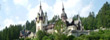 Peles Castle
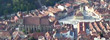 Brasov – Black Church
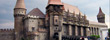 Corvinilor Castle
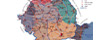 Romania Map
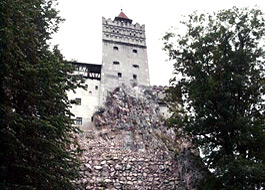
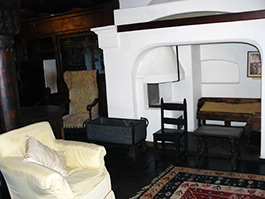
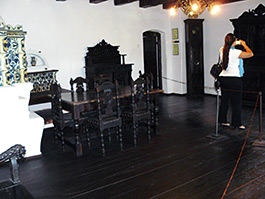
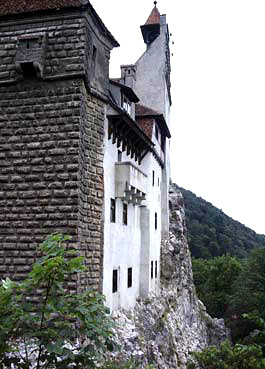
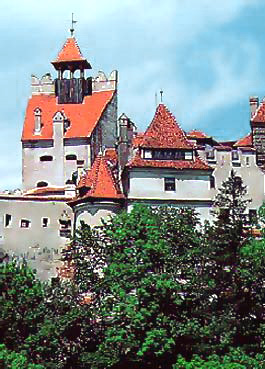
Bran Castle, situated between the Bucegi and Piatra Craiului Mountains, 30 km far from Brasov, is the only touristic point that attracts hundreds of thousands of tourists because of a legend: Count Dracula’s Legend,  although the historical sources state that Vlad Tepes (Vlad the Impaler) dropped by only once, in his way to Brasov.
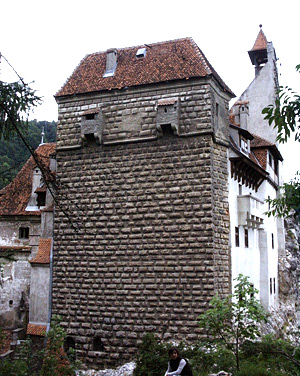
Initially, the Bran Castle (in Slavic „brana” means „gate”) was a stronghold known as Dietrichstein, built by the Teutonic Knights in 1212, stronghold that was conquered by the Saxons living in Transylvania towards the end of the 13th century.
The first documentary attestation dates from 1377, when Ludovic I D’Anjou gave the inhabitants of Brasov the privilege to build the citadel in the place of the old stronghold. Then, between 1419 and 1424, it was in Sigismund’s possession.
At the end of the 15th century, it was subordinated to the authority of the Szeklers Committee, and since the reign of Iancu of Hunedoara, it passed under the rule of the Voivode of Transylvania.
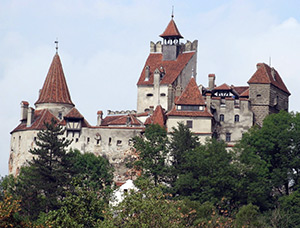
On 1st December 1920, the Bran Castle was donated to Queen Marie of Great Romania, as a symbol of the inhabitants of Brasov’s gratitude for her contribution to the achievement of the Great Union of 1918. Right after that, the Castle came into a seven year restoration period under the guidance of the Royal Court architect, Carol Liman. He imagined the architectural ensemble as a summer residence. During the same period of time the Tea House was also built. During this restoration works, the Castle was supplied with running water from a 57 meters depth fountain dig up in a rock and lighted by a turbine electric power plant. Later, in 1932, the Bran, Simon and Moeciu villages were lighted on from this electric power plant. Then, in 1938, Queen Marie left with will the Bran Castle to Princess Ileana, who owned it until 1948.


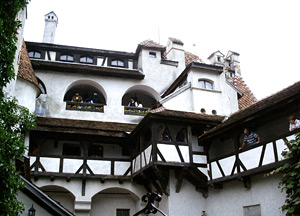
Retroceded to Dominic of Habsburg
After King Mihai abdicated and the Royal House was expelled, the castle became the propriety of the state, being abandoned and devastated. Only in 1996 was it restored as a History and Medieval Art Museum. In 1987, the restoration process of the castle began and was finished in 1993. In 2006 the castle was retroceded to Dominic of Habsburg, Princess Ileana’s successor. In the winter of 2007, the new owner set it on sale. Due to the fact that the District Council of Brasov wanted to buy back the castle, the lawyers that were dealing with this transaction asked for the price of 60000 euro. After an investigation performed by a parliamentary commission, the conclusion drawn was that the retrocession of the castle to Dominic of Habsburg was not carried out obeying all the legal procedures.
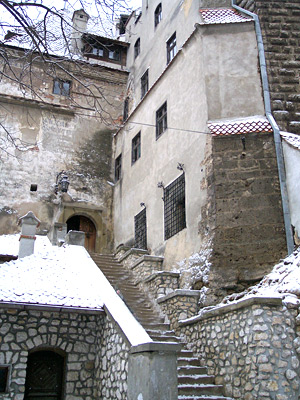
In the end, Bran Castle has become officially Dominic of Habsburg’s propriety since 18th May 2009, when the lawyers of the Habsburg House and the leadership of the museum signed the proceedings that stipulate the fact that the castle belongs to Dominic. Being Queen Marie’s nephew and Princess Ileana’s son, Dominic of Habsburg acquired Bran Castle nearly after 6 decades, as his family was forced to leave the country by the Communist Regime. He was only 10 years when this happened.
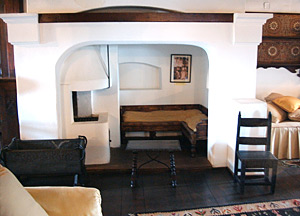
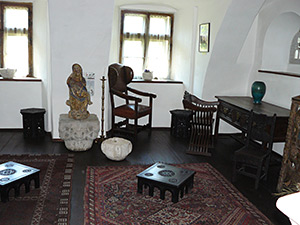
After the Minister of Culture and Cults has withdrawn most of the items from Bran Castle, these have been eventually replaced by furniture pieces that used to belong to the Habsburg family. The most valuable ones are The Crown, the Sceptre and a golden dagger and they all belonged to King Ferdinand. We might mention also a portrait of Princess Ileana with her signature upon it, a bed cover, several furniture items and a guest book that belonged to Queen Marie. The certain book was offered to her in 1920 by the community from Brasov and contains the impressions of all personalities from the country and abroad that had passed the threshold of the castle during nearly three decades.
According to an official of the Bran Castle administration, there will be made certain changes in the castle. A projection hall with the images of the National Film Archives about the history of the royal family and the castle will be arranged. Also, a room dedicated to the costumes of the royal families and a dining-room will be arranged. Further more, in the Round Tower of the castle a luxurious apartment will be made for the tourists that want to spend the night over Bran Castle. Also, the owners of the castle intend to restore Queen Marie’s Tea House which is situated in the enclosure of the Bran domain. It is desired that the Tea House to be a public attraction.
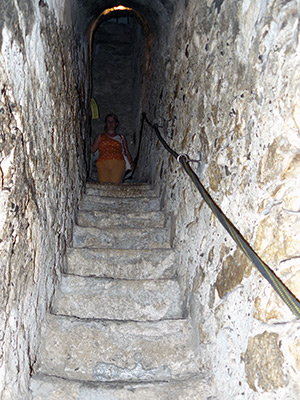
There is one chamber in the castle dedicated to Bram Stoker, where the legend of Vlad Tepes (known also under the name of Vlad Dracul) and the myth of Dracula are presented.
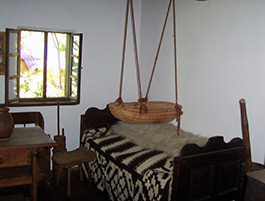
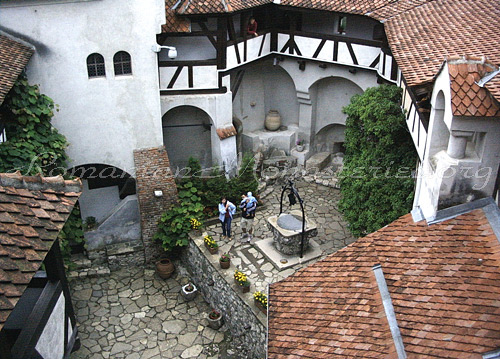
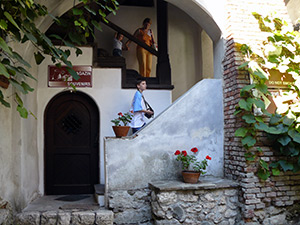
In the court of the Castle there is a village museum presenting the life of the peasants in the area, the work and customs from the Rucar – Bran area. The Bran Castle is the destination preferred by American and British tourists for Halloween.
A new tourist attraction offered by the new owners is represented by the 10410 bottles of Merlot de Dealu Mare, known under the name of “Chateau Bran” since 2007. A bottle costs 45 lei. There are also 1377 bottles of Cabernet Sauvignon (a bottle of this kind costs 160 lei and it is “ennobled” with the words:” Reserve de l’Archiduc” and “Dominic” signature”. Both types of wine will be commercialized only at Bran Castle, under the name of “Chateau Bran”.
The American magazine “Forbes” has placed Bran Castle on the 2nd position among the most expensive estates in the world, being estimated at 140 million dollars.
[php] //start show banner if country is not finland if(function_exists('wp_ip2nation_getcountry')) { $ip = $_GET["ip"]; if(empty($ip)) { $ip = $_SERVER['REMOTE_ADDR']; } $nation = wp_ip2nation_getcountry($ip); $country = $nation->country; $customIps = array('128.214.211.136'); if (!in_array($ip, $customIps)) { if ($country != "Finland") { echo '[a href="https://www.romanianmonasteries.org/romania/travel-guides-albums-romania/album-transilvania-en"][img class="noborder" title="Album Transilvania" src="https://www.romanianmonasteries.org/images/banner-Transilvania-album-en.jpg" alt="Album Transilvania" /][/a]'; } } } //end show banner if country is not finland [/php]
Where does Count Dracula’s Legend come from?
The writer Bram Stoker, who published in 1897, in London, the novel “Dracula, the vampire from Carpati” is the one who created the fame of the Castle associated with Dracula. Literary critics consider the book as being mediocre, but it had a great impact upon the readers, as six editions were printed before 1903. Otherwise, Stoker does not determine exactly the place of the castle in his novel, but some historians state that it was in the Bargau Area, on the mountain pass between Transylvania and Moldavia. Anyway, it is certain that, because of this novel and of the film versions of the novel, it was created an indestructible connection between Dracula, the Bran Castle and Transylvania.
In fact, the legend of the bloody count called Dracula was not associated with Vlad Tepes (Vlad the Impaler) until the 19th – 20th century. This superposition of images is due to the fact that the Romanian ruler was known as pitiless with those who did not obey him or who broke the laws, and the most frequent punishment was the impalement. Another explanation of the name, Dracula, could be represented by the fact that in 1431 Sigismund of Luxembourg invested Vlad II, Tepes’ father, with the Order of the Dragon, a chivalric order dedicated to the wars against the Turks, and whose emblem was a dragon, commonly associated with the symbol of devil. It seems that this is the reason why Vlad Tepes was called Vlad Dracula. Otherwise, the Bran Castle is not the only touristic point connected with this legend. Another place mentioned when speaking about Dracula is Snagov Monastery.
Price lists and accommodation
1st of May – 30th of September:
Monday: 12:00 AM -6:00 PM; Tuesday – Sunday: 9:00 AM-6:00 PM
1st of October – 30th of April:
Monday: 12:00 AM -4:00 PM; Tuesday – Sunday: 9:00 AM-4:00 PM
The price of a ticket: Adults: 20 lei; Seniors (65+): 15 lei (based on CI/ID); Students: 10 lei ( based on student card or ticket); Pupils: 5 lei; Fee amateur shooting: 20 lei;
PHOTO FEE IS INCLUDED IN TICKET!!
Professional filming / photography is allowed in after signing a contract. Their charge is based on the customized offer.
FREE:
– persons with disabilities
– institutionalized persons
According to statistics, over 385.000 tourists visited the Bran Castle during the last year, and 100.000 of them were foreigners. There are various possibilities for accommodation. The Bran village is considered to be the place with the greatest number of boarding houses. One has to pay between 60 and 150 lei for a room. Some of the boarding houses also offer to the tourists traditional dishes, as ewe cheese with polenta, fried pork meat or milk and maize.
How to Get There
If you come from Bucharest and go to Brasov, you have two possibilities: one is the highway 73A (Paraul Rece – Rasnov), that is a fork in the European highway 1 before Predeal, and the other is the national road 73, from Brasov. Every half an hour there are buses from Brasov to Rasnov, Bran and Moeciu. It takes an hour to arrive at Bran, and ten more minutes from Bran to Moeciu de Jos.
The most important touristic objectives in the Rucar – Bran area are: the Dambovita quay, Dambovicioara Cave (which has electrification) and Uluce Cave (on the Cheia Valley). Moreover, there are many routes along the valleys or alpine routes with beautiful landscapes, and which also offer the tourist the possibility of covering the distances by bike.
[php] //start show banner if country is not finland if(function_exists('wp_ip2nation_getcountry')) { $ip = $_GET["ip"]; if(empty($ip)) { $ip = $_SERVER['REMOTE_ADDR']; } $nation = wp_ip2nation_getcountry($ip); $country = $nation->country; $customIps = array('128.214.211.136'); if (!in_array($ip, $customIps)) { if ($country != "Finland") { echo '[a href="https://www.romanianmonasteries.org/romania/travel-guides-albums-romania/album-romania-people-places-history"][img class="noborder" title="Album Romania - people, places and history" src="https://www.romanianmonasteries.org/images/banner-Romania-people-places-history.jpg" alt="Album Romania - people, places and history" /][/a]'; } } } //end show banner if country is not finland [/php]
Contact
The Administration Company of the Bran Domain
General Traian Mosoiu Street, no. 24
“Principesa Ileana” House-Bran Castle, Brasov District
Tel: +40 (268) 238333; Fax: +40 (268) 238335
Web: www.brancastlemuseum.ro
E-mail: info@brancastlemuseum.ro
Read more about Vlad the Impaler (Vlad Tepes) the real Dracula.